

This newsletter will always be free, but paid subscriptions allow me to keep it alive. If you think this is a valuable recovery resource and want to support my work, please consider upgrading to a paid subscription or leaving a tip.
Housekeeping notes: A reader suggested I include more analysis of addiction and recovery plotlines in popular TV shows and movies in the newsletter. I think it’s a fun idea, so I’m taking suggestions for a) which plotlines you’d like me to discuss and b) if you like this idea, a fun category name for the segment (he suggested Sober Lady on the Red Carpet, but I think that makes me sound inaccurately fancy).
I’d also still hoping to do interviews with people in recovery and their loved ones. If that’s something you’d be open to (all parties can be anonymous), shoot me an email.
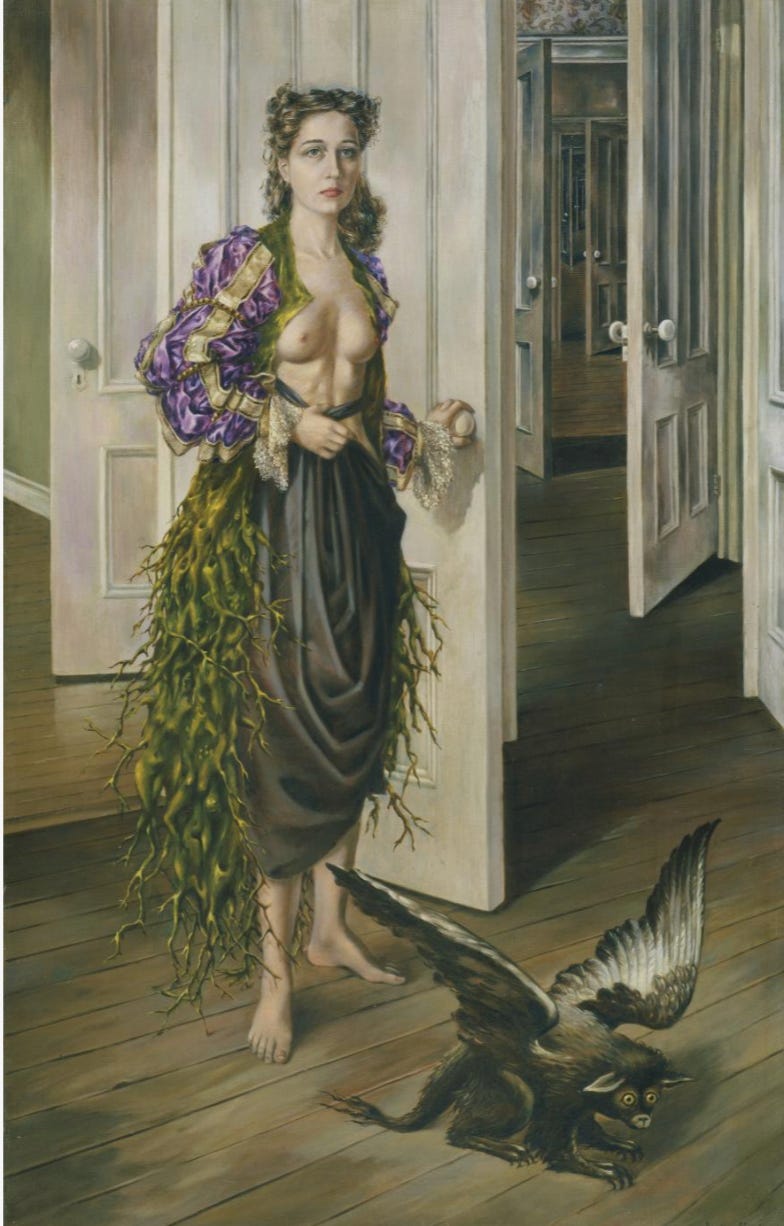
I knew it was a funhouse because of the mirrors. I’ve never been inside one of the classic carnival attractions, but I’ve seen enough movies to know that funhouses are often used to hide from bad guys, and not my idea of a good time.
In a funhouse, deception lurks around every corner: Mirrors reflect a distorted, incomprehensible version of yourself, your body shape shifting with each movement like a gelatinous blob inside a lava lamp; the floor tilts and spins, giving way just long enough to make your heart drop to your toes, and behind every door is an unknown certain to result in disorientation, anxiety, and fear.
Put another way: funhouses are the perfect metaphor for how I experienced alcohol addiction. I hadn’t previously considered the connection, but last week my brain forced me to make it when it thrust a carnival funhouse into a relapse dream, with all the subtlety of a Real Housewife.
I was standing in a dark, round room, surrounded by those warped mirrors. Under my feet, the floor rocked and tilted perilously. I didn’t know why I was there or how to get out. I was scared, stumbling, and confused. I was Drunk Katie, going in and out of a brownout: the second I thought I had my bearings, something would shift, and the world would be upside down again.
Eventually, I managed to move and started pulling open doors, trying to find a way out. Behind each door was a tableau that should have been reassuring: there, my loved ones were waiting for me. But they offered no comfort.
As happened so many times during my drinking, one glance at my family and friends was enough to know I’d fucked up. I didn’t know what I’d done, but I was sure I’d done it. Everyone I cared about was either furious at me or disappointed in me, likely both. The people who might have helped me find my way out of the labyrinth were now the people from whom I needed to run. Nothing the funhouse had in store could be worse than feeling the full weight of the heartbreak and betrayal my drinking had caused.
I haven’t had a drinking dream in a very long time, and this was more involved than most. I haven’t had any close calls or acute cravings for alcohol, so it took me a minute to shake off the nightmare’s residue and figure out why I had the dream now.
And then it clicked: On Saturday, January 24th, I will celebrate 18 years of continuous sobriety. Sober anniversaries are more than enough to stir up all kinds of weird subconscious brain activity. As this one approaches, it has felt especially surreal.
Eighteen years feels like an absurdly long time. I’m proud of it, but it also feels ridiculous to be talking about it. It’s like I have an 18-year-old kid who’s about to head off to college, but I can’t stop talking about the day they took their first step or how long it took them to be fully potty trained. Eighteen years sounds so removed from the nitty-gritty days of early recovery, and those nitty-gritty days of early recovery feel so much closer than 18 years would have you believe.
These weird, incongruous spaces are why I like writing this newsletter. I’m not writing it because I have some universal or omnipotent grasp on overcoming addiction—that doesn’t exist. I write it to better understand different experiences of recovery, including my own, and to (hopefully) help others feel better understood.
It’s wild that I can be (almost) eighteen years sober, have no recent alcohol cravings, and still have one of the most intense and disturbing drinking dreams of my sober life. On the one hand, it sucks. It’s also fascinating and, most importantly, an effective reminder of how desperate and helpless I felt waking up every morning to face consequences for actions I couldn’t remember.
Although I haven’t recently had any major alcohol cravings, I am 100% positive more are in my future. You could argue I have a low-level craving for alcohol all the time. If you told me a meteor was annihilating Earth in 24 hours, I can’t promise you I wouldn’t go buy a bottle of booze for the end.
I know there are people out there with much less sober time than I have who are completely serene in their recovery, who never experience cravings, and who live a life that, to use an AA-ism, is “happy, joyous, and free.” And I’m thrilled for them. I hope they share their story far and wide, so others of a similar ilk can be inspired by it.
My experience with recovery is different from the happy, joyous, and free among us, though I certainly feel that at times. I’ve never doubted that I’m better off sober than drunk. But I’ve also never felt like I’m floating from one blissfully recovered day to the next.
The AA-ism that holds together my sobriety, even all these years after I stopped going to meetings, is the most cliché: One day at a time. I can’t wrap my head around the fact that it’s been almost 18 years since I picked up a drink. What makes a little more sense is having 6,568 sober days, each gained in 24-hour increments of joy, stress, anger, grief, hilarity, accomplishment, failure, and even nightmarish drinking dreams, but always, always just one day at a time.
If you enjoyed this post, please like, comment, or share it. Doing so helps others find the newsletter!
Send questions and feedback to askasoberlady@gmail.com. By sending a question, you agree to let me reprint it in the newsletter with your name redacted or changed. Emails may be edited for length or clarity.
I’m not a doctor or mental health professional, so my advice shouldn’t be construed as medical or therapeutic. You are free to take or leave it.
“I write it to better understand different experiences of recovery, including my own, and to (hopefully) help others feel better understood.”
That intention is deeply generous. Writing like that turns personal healing into a quiet hand extended to others, saying you’re not alone, and your story makes sense.
Great post, Katie! 35 years sober, I can relate to a lot of this.