

Quick housekeeping note: There will be no newsletter next week. I have family coming into town and will be occupied with fawning over my nieces. See you in April!
Hi Sober Lady,
My boyfriend and I have been together for a little over two years. We’re both pretty avid gamers—it’s actually how we met. I want to preface this by saying I’m a gamer too. This isn’t about me not understanding the hobby; I get it, and I enjoy it. Often, he and I will play together. When we started dating, I felt like we spent roughly the same amount of time gaming. Slowly, he got more and more into it, and now it feels less like one piece of the puzzle of his life and more like the whole picture.
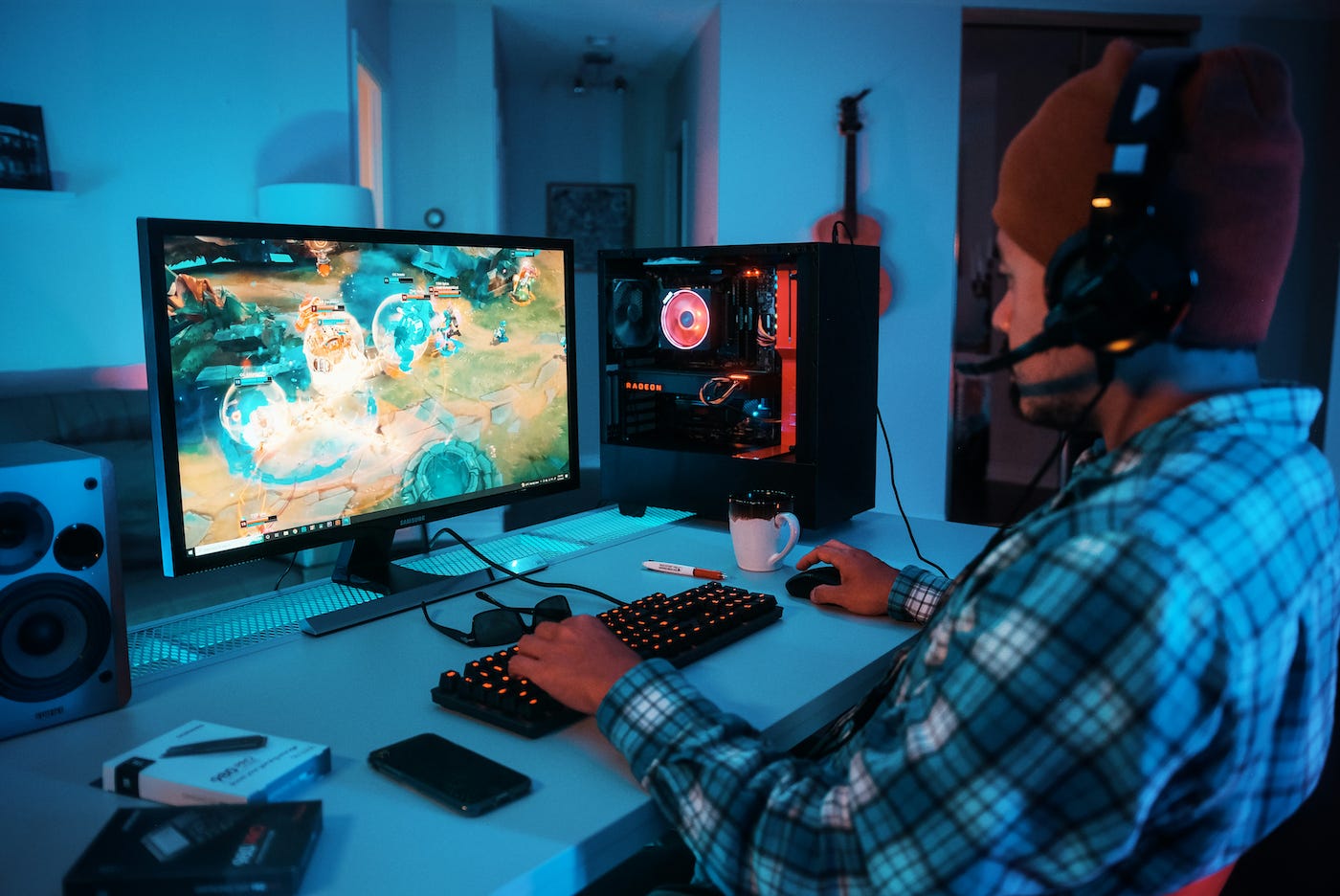
On a normal weeknight, he comes home from work and games for like five hours. On weekends, it’s all day and into at least part of the evening. He’s on his headset the entire time, laughing and talking with his online friends, while I’m sitting beside a person who acts like I don’t exist.
I’ve tried everything I can think of. He loves it when I join him and his friends in the game, but their intensity doesn’t make it super appealing. I suggested we work out a schedule together; I told him I’d even be happy with just three hours a day on weekdays (at least that would give us an hour or two together before I need to go to bed).
Three hours after work every day still feels excessive to me, but I thought it was a place to start. He said he didn’t want to feel “controlled.” I’ve planned date nights, suggested activities outside the house, and even brought up couples therapy. He’s not interested in any of it. He says gaming is his stress relief, and he doesn’t want to put limits on it.
Months ago, I wrote him a letter laying out everything I was feeling, and he promised he would make changes. Nothing has shifted—his gaming has actually increased. Now, when I bring up the letter, he just shrugs it off and says the thing about stress relief. We feel more like roommates than a couple—he spends more quality time online with his gaming friends than with me.
The rare times he’s not gaming, he’s very sweet and considerate, and I do enjoy hearing some of the funny stories from his gaming adventures; he’s fun and engaging, which reminds me of why we got together in the first place. I don’t want to give up on him or on us, but I feel invisible in the relationship like 90% of the time. At what point does a hobby become something more serious? Does this qualify as an actual addiction? And if that’s the case, what do I do about it?
Signed,
NPC in my relationship
Hi NPC,
Thanks for the email. Feeling invisible in your relationship is horrible and isolating; I’m so sorry that you’re experiencing it now. It’s also not something you—or anyone—should feel 90 percent of the time. We all have periods where we’re preoccupied with something and are less attentive to the important relationships in our lives, but that’s not what you’re describing. I commend you for trying to explain your feelings and for coming up with suggestions for more quality time together.
Yes, your boyfriend’s gaming habits certainly sound like more than just a hobby, and yes, “gaming disorder” or “internet gaming disorder” is increasingly recognized by clinicians. It falls under the category of “behavioral” or process addictions like gambling, and is increasingly discussed in the context of smartphones, social media, AI, and the internet in general.
You’ll hear a lot of talk about these technologies causing the brain to release dopamine (a chemical that drives motivation and reward-seeking behavior), which they absolutely do. As is the case with substance use, that’s not the only factor, but the point is that the potential is absolutely there.
All that said, I don’t think it really matters if your man has an addiction to gaming. If he were writing in to ask about his gaming, that would be one thing. We could get into the effect it’s having on his life, what happens when he tries to stop, etc.
None of that matters here. What matters is his outright dismissal of your concerns as “controlling” and his unwillingness to even discuss putting limits on his “stress relief,” even though you’ve clearly articulated how upsetting it is for you.
Believe me, I know how much easier it is to say this as a stranger who is outside the relationship, but nothing about what you’re describing is sustainable or healthy. The biggest red flag for me is not the number of hours he spends gaming, but his refusal to listen to how his behavior affects you and to discuss a compromise that could work for both of you.
You asked what you should do if it’s true that he has a gaming addiction, but I’m more concerned about the fact that you’re in a relationship with someone who is so comfortable minimizing your needs and utterly unwilling to have a reasonable discussion about what you both want the relationship to look like.
So my advice is to prioritize yourself. There are free 12-step and non-12-step resources for people with gaming addictions, and they include support for friends and family. As Zach and I discussed last week, groups aren’t going to be helpful for everyone, and 12-step groups can be polarizing, but I’d encourage you to give one of the meetings below a shot.
It sounds like you’ve been really lonely and isolated trying to deal with this by yourself, and I think the best possible thing for you right now is to know that you’re not alone and hear from others who have similar experiences. (SMART isn’t specific to gaming, but it’s open to anyone with a loved one experiencing addiction.)
Here are a few resources:
On-Line Gamers Anonymous (OLGA) – olganon.org – A 12-step fellowship for gamers and their loved ones (OLG-Anon) that has free online meetings and forums.
Gaming Addicts Anonymous (CGAA) – cgaa.info – 12-step program with meetings specifically for gaming addiction, including support for loved ones.
SMART Recovery Family & Friends – smartrecovery.org – Science-based (non-12-step) alternative with meetings and tools for people supporting someone with any addiction.
You might also think about getting one-on-one therapy, which can be helpful for anyone dealing with relationship issues.
But unless your boyfriend acknowledges that gaming has taken over much of his life and wants to change that, there’s little you can do to force that realization. What you can do is protect your mental health. In these groups, you will find others who understand what you’re going through and can help you navigate a path out of isolation and into a community where you’re 100% visible and your needs are heard and validated.
If you enjoyed this post, please like, comment, or share it. Doing so helps others find the newsletter!
Want to support my work without committing to $5/month (or $50/year)? Leave a one-time tip.
Send questions and feedback to askasoberlady@gmail.com. By sending a question, you agree to let me reprint it in the newsletter with your name redacted or changed. Emails may be edited for length or clarity.
I’m not a doctor or mental health professional, so my advice shouldn’t be construed as medical or therapeutic. You are free to take or leave it.
Addiction wears different costumes, but the underlying character is very similar. And it always lies.
When I first got together with my (estranged) husband, we worked together, were friends, and drank together. He had a social life that revolved a lot around games, sports, and betting. When we were married, working, and had small children and negligible external help, he spent most of his time after the kids were asleep, and a good part of weekends, on watching sport/selecting bets/ playing.
Any time I complained, he would say " I don't have a problem with X, YOU have a problem with me doing it" / "It is my down time" / "It is how I connect with my friends".
He moved from horse racing to football betting to poker to crypto.
He also regularly undermined my attempts to stop drinking. A new therapist last year pointed out that keeping ne drinking was keeping me more compliant, and less likely to complain about his being chronically on an online poker site (even while watching TV together!).
I left him after 32 yeara together. It has been difficult, but so far (6 months in) I have no regrets .