

I believe information about substance use, addiction, and recovery should be available to everyone, which is why AASL has no paywall. But publishing a weekly newsletter takes time and energy—and until I win Powerball, I need paying subscribers to sustain it.
If you want to support this work, please consider becoming a paid subscriber. If you’re not in a position to upgrade your subscription (totally understand!), sharing the newsletter with others is also a huge help.
Housekeeping: Next week’s newsletter will hit your inboxes on Friday instead of Thursday.
Last week, I met a college friend for dinner in Brooklyn. I hadn’t visited New York since a brief trip in 2019, a few years before my partner and I moved to rural Washington.
I mentioned the move and Sam told me he’d seen pictures I’d posted. “It looks amazing,” he said, “but I never ever would have guessed you’d end up living with goats in farm country.”
I laughed. No one saw it coming, least of all the people who knew me in college. Sam and I met during freshman orientation and became fast friends, in no small part because we delighted in each other’s debaucherous antics. It goes without saying that I was a heavy drinker in college (a world record understatement), but I was also extremely social.
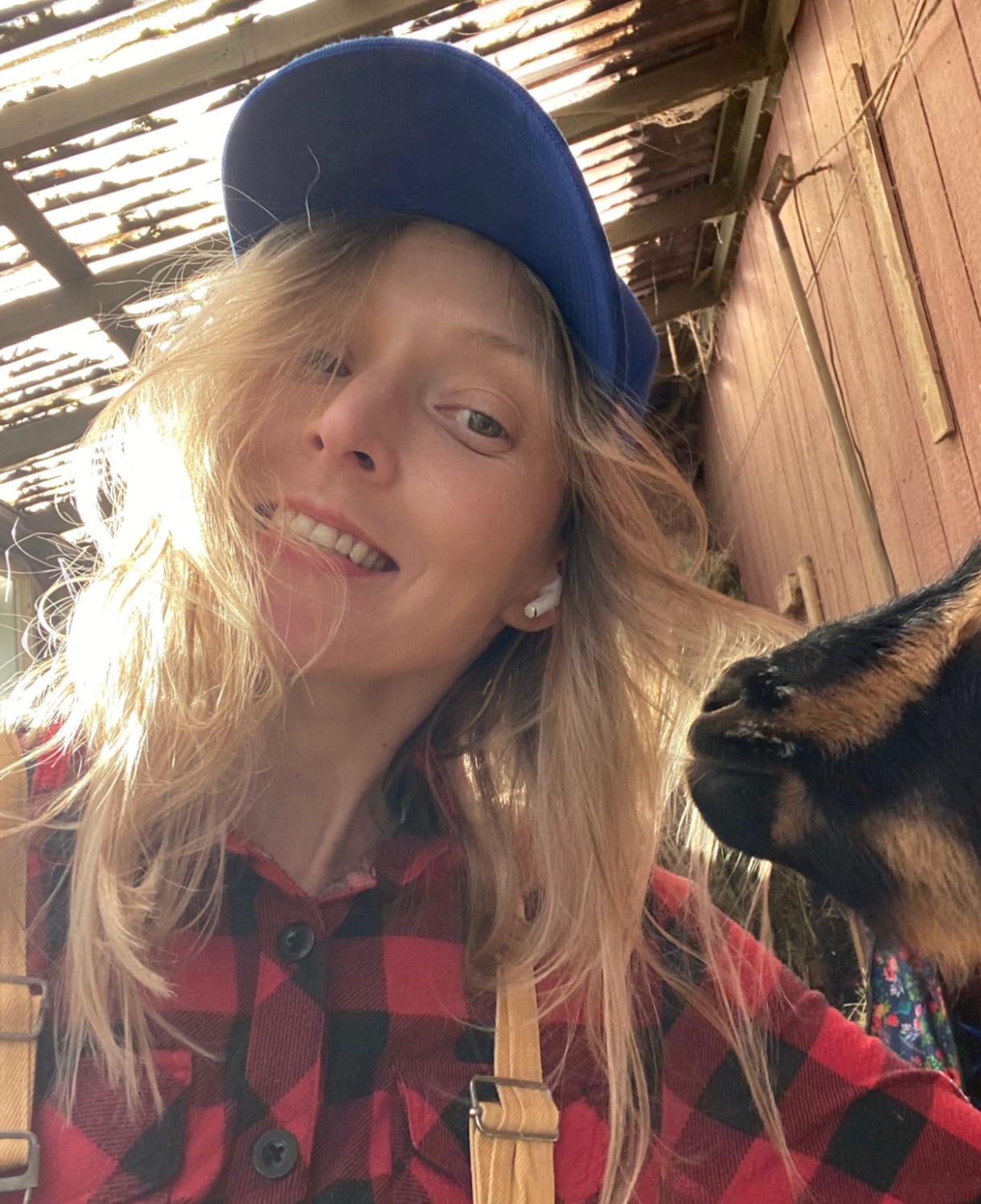
So, as Sam was accurately implying, if you had asked anyone who knew me then what my adult life would be like, they probably would have guessed I’d land in a big city with a great bar scene and a gaggle of messy friends by my side. Which is exactly how I pictured my future life, too. The notion that my days would involve cleaning up goat shit in overalls and a trucker hat would have entered the picture only as either a punishment or a punchline.
In 2005, after my Sophomore year of college, I got a publishing internship in New York. I spent my days alternating between working for free at a publishing house and working for minimum wage at American Eagle Outfitters in SoHo. (If I never hear the phrase “Can I show you our denim wall?” it will be too soon.) Nights were spent with my college boyfriend, an NYC native who knew all the bars and liquor stores that would serve almost-but-not-quite 21-year-olds.
At the time, New York City felt like a playground upon which my friends and I could play-act adulthood without the responsibilities of adult life. It was exciting but also a hazy, inherently temporary adventure.
My first (and last) attempt at being a Real Adult in a Real City came a few years later, about six months after I graduated from college. I took a publishing-adjacent job in Chicago in late December of 2007. It didn’t last long. By the end of January, I was back in California and in treatment for alcohol addiction.
I was already addicted to alcohol before I moved to Chicago. For months, my hands shook in the morning, which led to drinking immediately after waking up, which led to constant drinking throughout the day until whenever I passed out. That routine began in the quaint, protected suburbs where my parents lived and I secretly drank.
It was during this post-college period that I learned I wasn’t actually an extrovert. Being social had simply been a useful cover for drinking. In college, no one I knew sat around and drank by themselves. To drink was to be social; I was definitely going to drink, so I guess that meant being social. On my own, in post-graduation limbo? Drinking all by myself was fine with me.
So while I can’t blame the city of Chicago for my demise (though I initially tried), it was there that my downward spiral accelerated considerably. It’s a drinking-friendly city—I was warily pleased to discover that the 7-Elevens sold hard liquor, not just beer and wine as they did in California.
I passed three different 7-Elevens on my way to work and eventually reached the point where I felt genuine pride on days when I made it past the first two stores, only to cave and slip into the third. With a shaking hand, I’d hand my ID to the clerk at 8:30 on a Tuesday morning and not get so much as a side eye. Instead, I received a very bored “see you tomorrow.” And they would.
It was a relief to get sober in a small town in Marin County—a place once known for its hippie, artsy roots (and now known for very expensive houses), but never for an abundance of bars or liquor stores.
Eventually, I moved to an even more remote place, surrounding myself with nature, animals, and a healthy dose of solitude. It’s not what I—or anyone who knew me when I was drinking—would have expected, but it fits. It feels right.
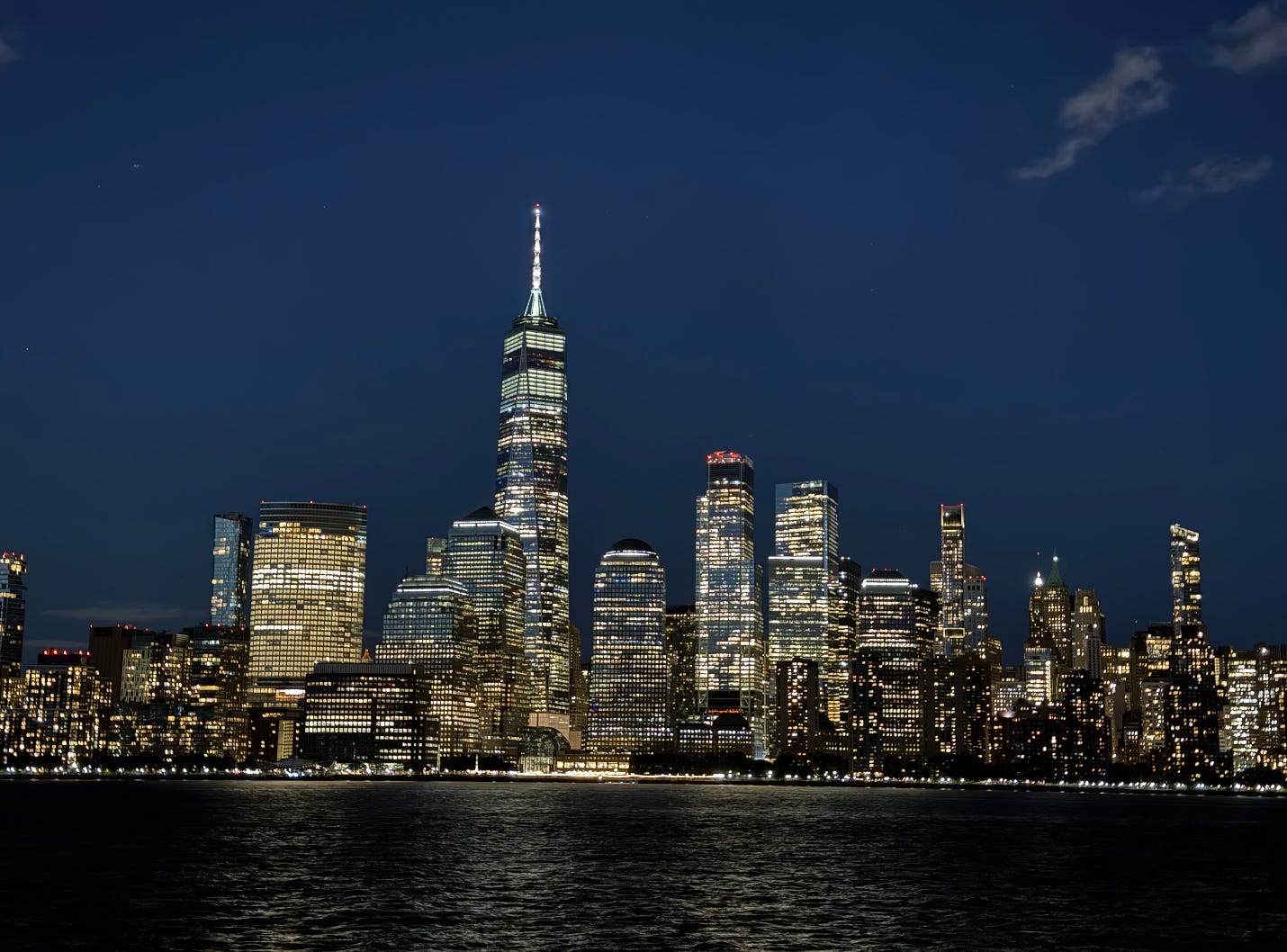
I hadn’t realized how much I’d gotten used to the solitude, nature, and overall distance from the bright lights and big city until I visited friends in New York over the 4th of July (a very smart, calm, and normal time to visit the most populous city in the United States).
It sounds ridiculous, but it was jarring to see multiple liquor stores, bars, and other places to procure booze on almost every block. Restaurants featured drink specials more prominently than food—even the beverage options at the theater where I saw a show were limited to something-something vodka and something-something tequila. (I only remember important ingredients.)
It wasn’t that these were particularly tempting to me, but I found myself repeatedly muttering, ‘How does anyone get or stay sober here!?’ I wondered if my sobriety was less my own doing and more the result of sequestering myself to the life of a goat farmer. Was I really as secure in my sobriety as I felt? Or had I merely cocooned myself from temptation?
It took me a few days to realize that I had broken my first (and only) rule about recovery: Don’t assume what’s true for you will be true for someone else. I was superimposing my triggers and perspective onto an entire city and forgetting how individual and nuanced the process can be.
There may be many bars and liquor stores in New York, but there are also countless recovery meetings (both 12-step and not) and support groups, roughly a gazillion therapists with an expertise in addiction—far more than you’ll ever find in Goatlandia—and some of the best hospitals in the world.
In my rush to notice every liquor store on every block, I forgot that I actually know tons of people who got sober in New York and other major cities (even my old pal, Chicago).
Sobriety surprised me when it revealed that I’m not actually an extrovert thrilled by big city life. I wanted to be that person (she seemed cool), but it’s just not how I’m built. The noise and chaos of my drinking never allowed me to grasp that it was possible to let go of the person I thought I was supposed to be and instead figure out who I actually am.
Recovery doesn’t make you a certain kind of person; it shows you who you are once you’re no longer driven by destructive, insatiable desires. As it turns out, I’m someone who spends her free time pulling weeds and cleaning up after four goats who are mostly interested in trying to eat her hair and defecating in all the freshly cleaned spots in their stall. College me would be horrified, and she’d be wrong.
*
If you enjoyed this post, please like, comment, or share it. This helps others find the newsletter!
Want to show your support of AASL without committing to a paid subscription? Leave a one-time tip here.
Send questions and feedback to askasoberlady@gmail.com. By sending a question, you agree to let me reprint it in the newsletter with your name redacted or changed. Emails may be edited for length or clarity.
I’m not a doctor or mental health professional, so my advice shouldn’t be construed as medical or therapeutic. You are free to take or leave it.
This is such a great read, Katie. The discovery that—surprise!!—you’re not an extrovert resonated with me. I talked with my college roommate recently about how I’m actually an introvert, despite being our sorority’s social chair (drinking + knowing a lot of guys = social chair) and being her hard-partying, post-college roommate. She was shocked. Sobriety lets us learn who we are and stop pretending to be what we think we’re supposed to be.
always a delightful and important read Katie. getting sober in Las Vegas presented a number of challenges, from free cocktails to 24 hr liquor stores with “convenient” shopping carts for those times when you can’t carry the large number of bottles in two hands.
it is hard to get and stay sober most anywhere, i suppose, but it can be done.
cheers to being in a different and much better place than our young minds imagined.