

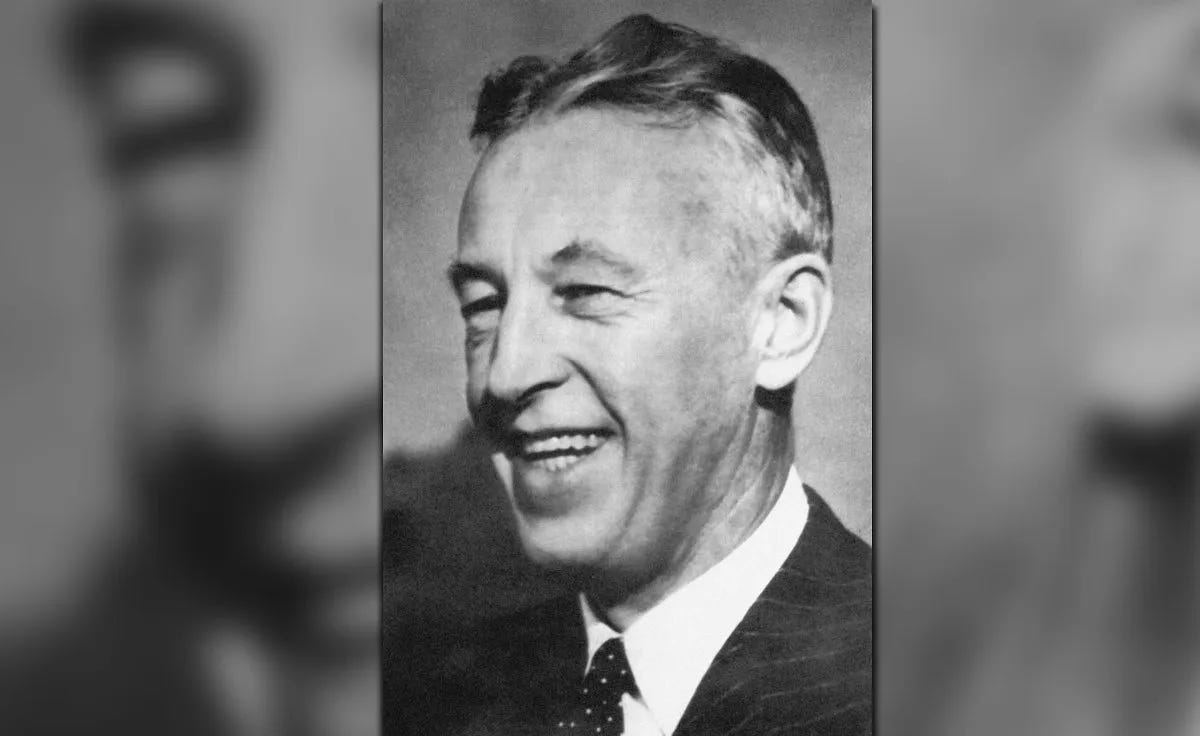
When Susan Cheever was researching My Name Is Bill, her biography of Alcoholics Anonymous founder Bill Wilson, she found something in Wilson’s archives that she later told The Washington Post1 “made her blood run cold.”
Wilson had been battling emphysema for years, and by the summer and fall of 1970, it was clear that he didn’t have long to live. By September, he had round-the-clock care and left his bedroom only when he required hospitalization. Cheever had been poring through the notes from the home nurses when she found the offending entries.
At 6:10 a.m. on Christmas morning, Wilson asked for “three shots of whiskey,” which he was promptly denied.
A week later, Wilson asked for booze again a week later, on Jan. 2, 1971. Subsequent requests were made on the 8th and the 14th. (Hey, man, if at first you don’t succeed...)
Upon finding these notes, Cheever was initially “shocked and horrified.” It was a sentiment many members of Alcoholics Anonymous instinctively felt when learning of Wilson’s request—this was, after all, the man who had made lifelong recovery possible for them, who taught them about the gifts of sobriety, who openly discussed how the obsession to drink had been lifted. How could a man with 36 years of sobriety make such a request so close to the end?
Paid subscriptions allow me to keep this newsletter free for all. If you think this is a valuable resource and want to support my work, please consider upgrading to a paid subscription or subscribing for free. Thank you for reading!
Now, most people in AA use this story as an example of the “cunning, baffling, powerful” nature of alcohol for the alcoholic, and I don’t disagree. They understand Wilson explicitly rejected any attempts to deify him or turn him into some kind of guru. For all his other faults, he was determined to be one “garden variety (recovered) drunk” among others. What could be a better example of both his fundamental human-ness and the awesome power alcohol holds in the alcoholic’s mind?
That’s all well and good. I have a different question: WHY DIDN’T THEY GIVE HIM A SHOT OF WHISKEY?
My guess is that they believed it was good for everyone involved to be able to say that the co-founder of Alcoholics Anonymous got sober in 1934 and didn’t consume another drop of alcohol until he died in 1971. In other words, I think it was mostly about optics and branding. Maybe that was the right call.
This feels almost sacrilegious to say among certain groups, but it’s the truth: if I am bedridden with only a few days to live, if my loved ones are gathered around just waiting for my organs to shut down, and I ask for a shot of vodka? I will come back and haunt the crap out of anyone who denies me.
To be absolutely clear: This is how I feel right now about a very specific, very hypothetical situation. I’ve always been hesitant to share it because a) who knows how I’ll really feel when the time comes, and b) if you get nothing else from this newsletter, I hope it’s that what’s right for me could be totally wrong for someone else and vice versa.
So why even bring it up? Because I think about the Bill/deathbed/whiskey anecdote frequently, and have often wondered why I feel the way I do about it.
I stay sober because if I don’t, my whole life falls apart. I stay sober so I can go into each day with a brain that is present and semi-functional and doesn’t spend every moment battling a destructive chaos of its own creation. I stay sober so I can (with *widely* varying degrees of success) do the work I want to do. So I can spend time with my loved ones, pet my animals, and notice that the first fawn of the season has arrived in my yard.

I stay sober because I want to wring every beautiful moment out of life, even if that means putting up with a bunch of ugly, soul-crushing moments that show up uninvited. I stay sober because I don’t want to squander the second chance I was given; there are things I want to see and experience, and the last thing I want is to end up back in the nightmarish funhouse of my drinking.
I am not suggesting that if I received a terminal diagnosis today, I’d go drink (I wouldn’t). But IF I reached what was unquestionably the end and IF at that moment, I wanted a drink, you bet your ass I’d ask for one. I refuse to believe that doing so would somehow magically discredit the years of sobriety that came before. For me, sobriety has always been about an appreciation and acceptance of life.
I hope that when the end comes—and I mean the very end—I won’t adhere to anyone else’s idea of how a sober person should die. I hope that no one denies me a deathbed request for their own purposes. Maybe I’ll want a shot of vodka, maybe I’ll want apple juice, but I know I’ll want the agency to make that choice. Because if I can stay sober until my body creaks and grinds to a halt? I’m going to raise a toast to myself for a job well done.
*
If you enjoyed this post, please like, comment, or share it. Doing so helps others find the newsletter!
Want to support my work without committing to a paid subscription? Leave a one-time tip here.
Send questions and feedback to askasoberlady@gmail.com. By sending a question, you agree to let me reprint it in the newsletter with your name redacted or changed. Emails may be edited for length or clarity.
I’m not a doctor or mental health professional, so my advice shouldn’t be construed as medical or therapeutic. You are free to take or leave it.
My sister-in-law, decades sober and an intake clinician at a rehab facility, 'picked up' when given a terminal diagnosis. She enjoyed her margarita or two in the last weeks of her life, as she enjoyed too much chocolate cake, visits with long-distant friends, and more. "One day at a time," for her, was just that. Each day brought a new opportunity to live as she felt best. She didn't think she had lost her decades of sobriety. They had happened and had made the clear-headed decisions she made at the end possible.
I love this post. It's so important to remember that we're human. That we should have agency, always.
I recently watched an old episode of Nurse Jackie. John Cullum plays a dying man in the ER. He's queer and sober and refuses opiates (morphine) because he didn't want to give up his sobriety. The nurses give him morphine any way, out of a sense of responsibility to ease his suffering. It's administered with love and respect, and when the character realizes he's ben given the drugs he's grateful, not upset. It was beautiful, but it was a violation of his wishes. I had trouble with that, but was comforted, too. Because the other side of personal agency is not seeing what might be best for us in any given moment. There are helpers out there.
"if you get nothing else from this newsletter, I hope it’s that what’s right for me could be totally wrong for someone else and vice versa."
I take everything one day at a time these days. It's the way I live a happy, grace-filled life. I never imagined I could do it. Thanks for this piece. Brilliant. xo