

All Ask a Sober Lady posts are 100% free, but paid subscriptions keep the newsletter alive. If you want to support my work and this recovery resource, consider upgrading to a paid subscription or leave a tip.
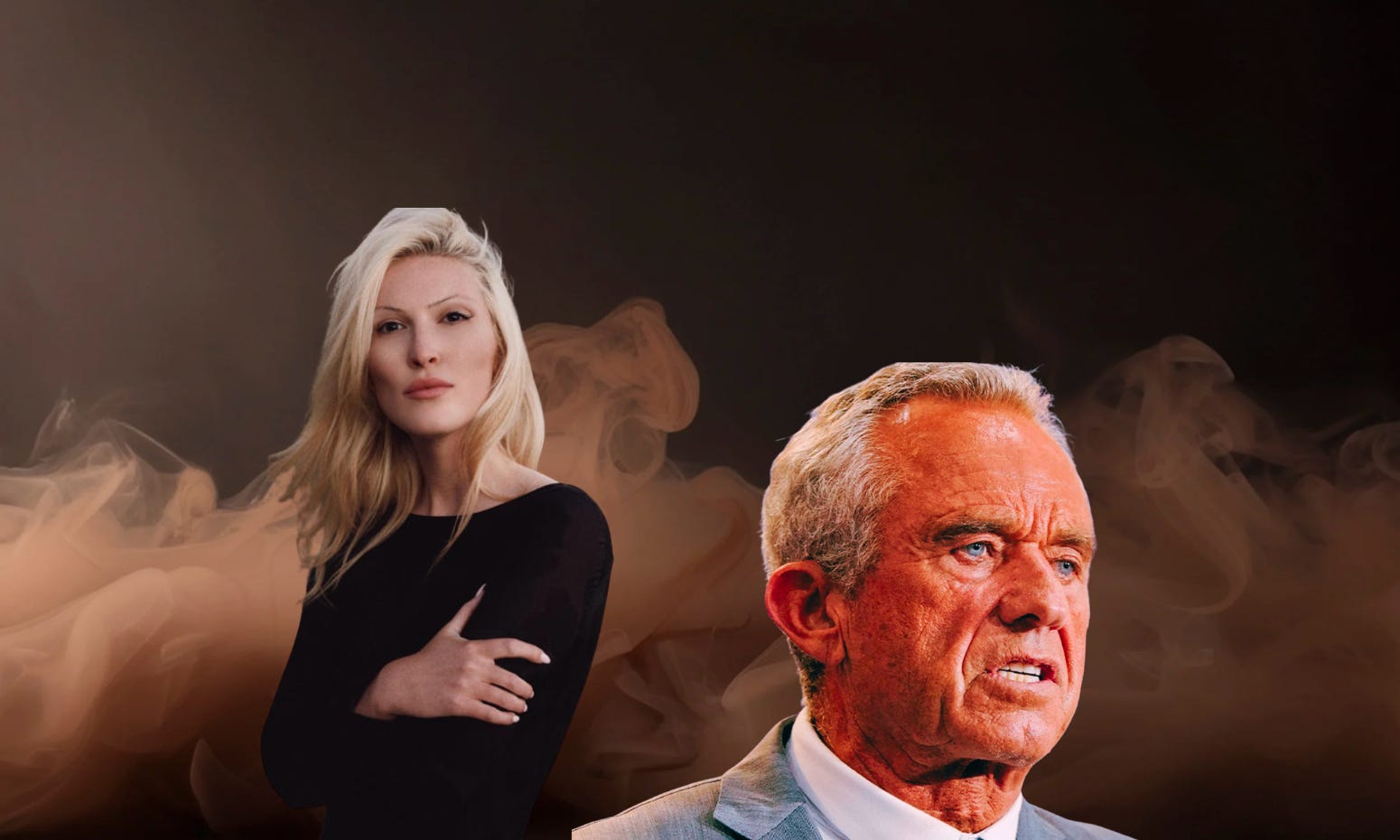
If you are somehow blissfully ignorant of the ongoing scandal involving political journalists Olivia Nuzzi, Ryan Lizza, Health and Human Services Secretary Robert F. Kennedy Jr., and the water tower above former presidential candidate Mark Sanford’s South Carolina home, I apologize for bringing it to your attention. This post is not about the sordid details of the scandal, which are readily available to anyone with internet access (though be warned: Your brain will beg for nothing less than a Silkwood shower after).
For our purposes, all you need to know is that two political journalists, Oliva Nuzzi and Ryan Lizza, were engaged to be married until last year, when they broke up over revelations that she’d had an affair with one-time presidential candidate and current Health and Human Services secretary, RFK Jr. What makes it a national scandal isn’t just the high profile nature of the players, but the flagrant conflict of interest and breach of journalistic ethics of Nuzzi’s romantic involvement with a presidential candidate while also covering his campaign (or any presidential candidate’s campaign) for New York Magazine.
The implications of this kind of scandal for journalism are very real and have been well articulated elsewhere. What makes the fallout relevant to this newsletter is the way that Lizza, Nuzzi, and various news outlets are using rumors about Kennedy’s sobriety to wring another sensationalized headline out of the juicy scandal.
Let me make something crystal clear: As a science journalist, recovering alcoholic, food-eater, water-drinker, medicine-taker, and person who enjoys not dying of infectious diseases, nearly everything RFK Jr. does in his professional capacity appalls and infuriates me. He is uniquely unqualified for the position he holds, and if you’d like to know more about that, no one covers it better than Dr. Andrea Love does in her newsletter, Immunologic.
It’s well known that Kennedy is a recovering heroin addict—he’s said that his opioid use began at 15 years old and continued for the next 14 years. He’s maintained that he kicked the habit through twelve-step meetings, which—as recently as this year— he said he still attends daily.
Knowing that media gossips (myself included) are shamelessly rubbernecking the fallout from the whole baffling affair, Lizza writes on his Substack1 that “Kennedy’s aides believed he was using drugs again, and Kennedy confessed to Olivia that he was using ketamine.” In her book on the scandal—which I have not read because even my self-loathing has limits—Nuzzi confirms that the future HHS Secretary told her that he uses the hallucinogen DMT. She also reports hearing that he used “another drug” (ketamine, if Lizza is accurately recounting what Nuzzi told him) and that “there were rumors it sometimes interfered with his ability to perform the work of campaigning for office.”
In Saachi Koul’s nearly flawless, scathing, and hilarious review of Nuzzi’s book for Slate, she writes, “Nuzzi paints herself as the most credulous reporter in the world, making the most brain-dead assessments you could imagine. When Kennedy confesses to her that he’s been using DMT (a type of hallucinogen), she doesn’t consider that his sobriety has been compromised.”
Other outlets have characterized the revelations similarly. The Daily Beast wrote, “Nuzzi claims in the book that Kennedy told her he loved her, had a pregnancy fetish and admitted to using drugs like ketamine and DMT, despite claiming to be ‘sober’ following recovery from heroin addiction.”
Again and again, Kennedy’s alleged substance use is framed as diametrically opposed to his alleged sobriety. And maybe it is! Maybe he really is using these substances in a compulsive and harmful way that has resulted in another addiction. Maybe. But as far as we know, the only substance to which he’s been addicted is heroin. No one has suggested that he’s using heroin again. And from what I can glean from the book reviews and shamelessly screenshotted Lizza posts, there’s no evidence to suggest an all-out addiction to either ketamine or DMT.
So, while a presidential candidate, anti-vaxer, and general whackadoo using a potent hallucinogen and dissociative anesthetic obviously comes with a certain amount of risk, I don’t think it’s fair to argue that Nuzzi’s continued belief in Kennedy’s sobriety despite his alleged use of these substances is the “most brain-dead assessment you could imagine.”
For one thing, ketamine can be used in a therapeutic context and often helps people with intractable major depression. As I wrote in an essay for The Small Bow a few years ago, I tried ketamine-assisted therapy in hopes of alleviating my treatment-resistant depression. Unfortunately, all it did was make me violently ill. But I didn’t go to that clinic in service of my addiction; I went because I’d tried every traditional antidepressant on the planet and still couldn’t get out of my depression.
Similarly, plenty of people use hallucinogens as part of spiritual ceremonies or therapeutically. Some people will indeed misuse these substances, but I think there’s a bigger danger afoot: the belief that any substance use “compromises” or negates a person’s sobriety from a completely different substance. Worse still is the tawdry reality that others feel empowered to publicly declare whether or not a person should still be considered sober based on substance use that had nothing to do with their original addiction.
Kennedy is not the most sympathetic example here, and perhaps he is misusing these substances. But consider a different example: I wrote in my Elizabeth Gilbert post that “Gilbert repeatedly mentions Rayya using trazodone—a drug so safe and non-intoxicating that they let us take it in rehab— in the same breath as her cocaine and alcohol use...”
One reader quoted that line and wrote in the post’s comments: “Wait... so are you not fully sober?” The same reader later followed up with an additional comment: “Thanks for the confirmation that people who make sobriety their whole personality are not, in fact, dedicated to sobriety. That they claim to ‘need’ drugs.”
First of all: Rude. I also make goats, dogs, and being an insufferable know-it-all part of my personality because—like all of us—I contain multitudes. More importantly, however, “fully sober” means different things to different people.
For me, sobriety is the practice of abstaining from alcohol because that’s the substance to which I was addicted. If someone else wants to define sobriety as abstinence from all psychoactive substances, great. But these are not universal definitions.
Maybe your definition of sobriety includes coffee and cigarettes, maybe it doesn’t. Maybe it includes ketamine therapy, maybe it doesn’t. We don’t know whether RFK Jr. is using the substances alleged, and, if he is, how or why. I understand that Jr. feels like an easy punching bag (because oh my god, he is!), but there are so many more legitimate things to criticize him for than being a sober person rumored to use DMT or ketamine.
What makes RFK Jr. such a terrible HHS Secretary is his penchant for making bold, definitive claims on flawed, misinterpreted, or outright false information. His hypocrisy is infuriating, but there are more effective and constructive ways to illustrate the harmful results than by combating them with our own bold, speculative claims.
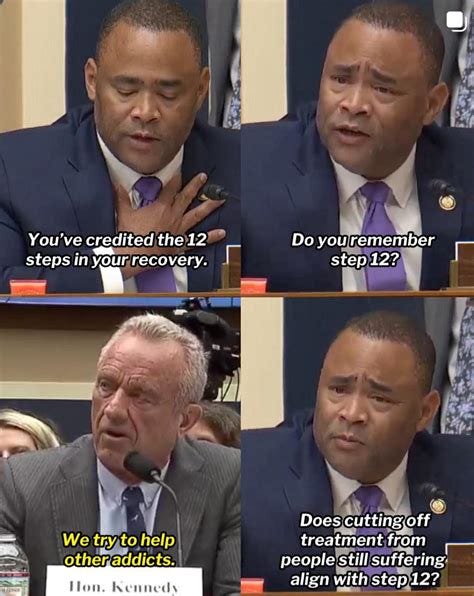
There are plenty of facts to stick to when pointing out RFK Jr.’s hypocrisy. In a June congressional hearing, Congressman Marc Veasey did this expertly when he noted that the 12th step of the Program Kennedy credits with getting him sober calls for helping other people struggling with addiction. When he asked Jr. to square this value with the HHS slashing funding for the Substance Abuse and Mental Health Service Administration, Kennedy’s hypocrisy and its effect on people’s health were on full display. Isn’t that so much more satisfying than speculation about ketamine and sobriety?
If you enjoyed this post, please like, comment, or share it. Doing so helps others find the newsletter!
I’m linking to his Substack because readers deserve to see the source, but if you end up paying for his newsletter instead of mine, I might actually die.
Send questions and feedback to askasoberlady@gmail.com. By sending a question, you agree to let me reprint it in the newsletter with your name redacted or changed. Emails may be edited for length or clarity.
I’m not a doctor or mental health professional, so my advice shouldn’t be construed as medical or therapeutic. You are free to take or leave it.
I appreciate your perspective
Always appreciate the reminder of a wider lens around sobriety. I’m in the same boat. For me, alcohol was the thing, maybe it will be something else some day, but it’s not/hasn’t been. And sometimes I get sucked into wanting to please others’ definitions of sobriety. Thanks for this thoughtful piece.