

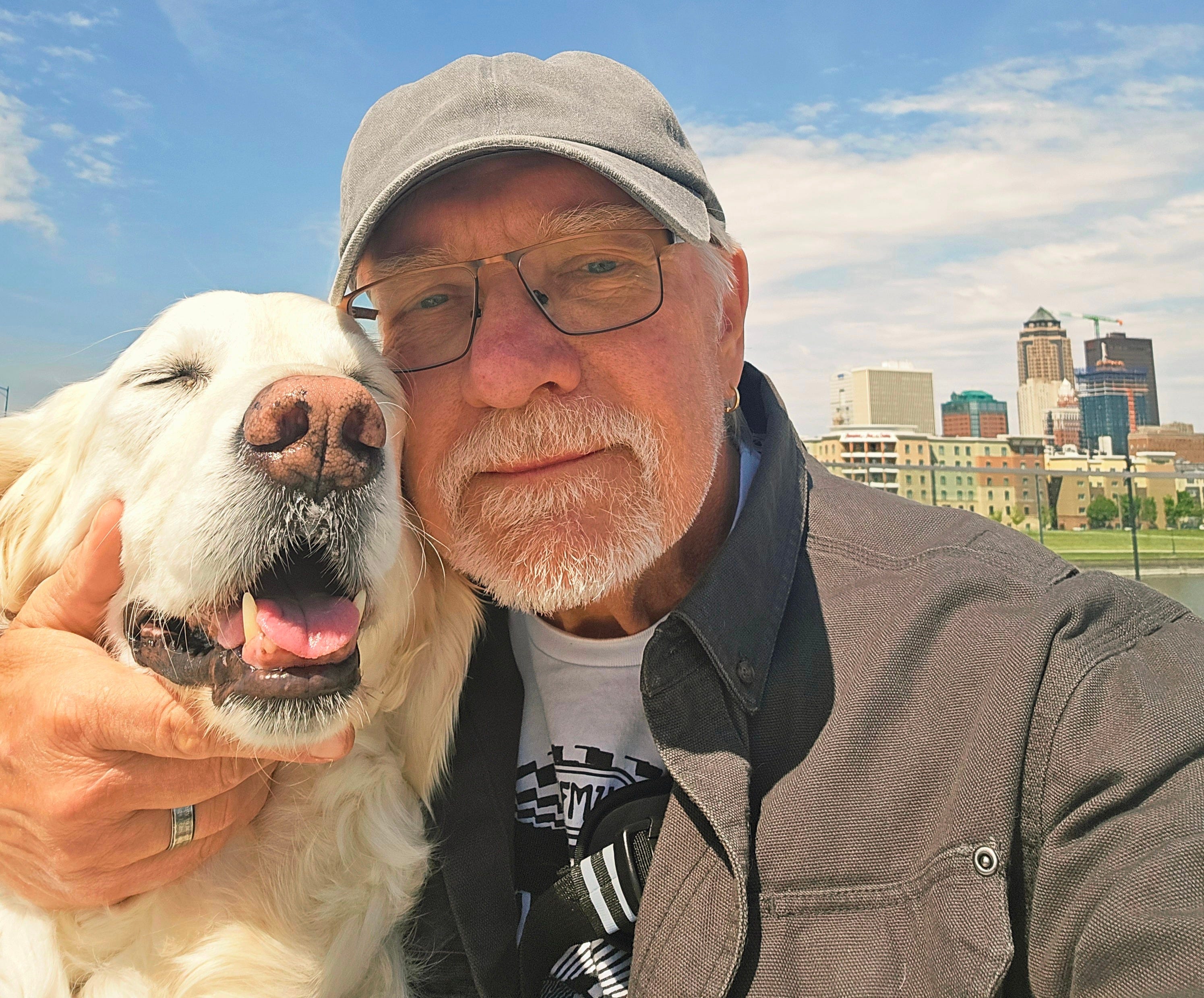
Apologies for the newsletter arriving a day late. I had the opportunity to meet an AASL reader (and new friend), Dave, for coffee, and he kindly allowed me to interview him. It threw my routine off a bit, hence the Friday publication, but I think it’s worth it and I hope you do too.
One of the reasons I wanted to start doing these Q&As is because there are so many different experiences of addiction (and recovery). The more stories we hear, the more we realize that substance use disorders don’t present the same for everyone, nor is there only one path to recovery. I’m very grateful to Dave for letting me share his experience.
All posts on Ask a Sober Lady are free for anyone to read. That said, paying subscribers are the only way to keep the newsletter afloat. If you’re in a position to upgrade from a free to a paid subscription, I could really use the support. If not, I understand; all subscriptions, shares, and likes are appreciated!
KM: Thanks for letting me do this, Dave. Let’s start from the beginning.
D: I grew up in the shadow of the steel mills in South Chicago. Everyone drank. There was at least one bar on every corner. Alcohol was just a part of society. My father died when I was in high school. I can still recall at his funeral, people coming up to me, a junior in high school, and saying, “You’re the man of the family now.” I had an older brother, and I couldn’t figure out why no one was telling him that, but the whole thing was surreal.
I had always felt a little outside the family, for lack of a better term. Like, at big family gatherings, I would just drift off and go watch a movie in a different room. I didn’t feel the clannish warmth. Not because of bad things; I just...never felt it. So after my dad died, I was trying to take care of my now-widowed mother. My brother was living upstairs with his new wife, but he never really was the sort of hands-on caretaker guy. I was always that little kid. If someone in the family had an object that broke, I’d put it back together.
So, in a sense, I was sort of groomed for fixing things. That never really let up.
KM: Did you start drinking in high school?
D: What’s in high school? Booze, girls, loud music, and being crazy. But also feeling awkward and wanting that feeling of awkwardness to go away. I drank a bunch of cheap wine, and that feeling would go away—things got better. So the stage was kind of set—the environment was very conducive to drinking.
And it didn’t seem like there was anything wrong with that. We all knew people who abused drugs and alcohol, and it was visible. You knew who was fucked up and not managing life—you could see it. So I just assumed everyone else was handling it well. If someone is not in jail and they have a roof over their head, you assume they’re fine.
K: Right, so if that’s not you, what’s the problem?
D: There were many crazy episodes in high school and college. There were times when I got shitfaced or blacked out, but I was also first or second [in my class] in academics.
KM: If you’re performing in a certain way, your drinking can’t be a problem, right?.
D: Yep, and that continued after graduation and throughout grad school. I met a woman, became a father, got a full-time job.
I should add: no one chooses this. No one says, ‘God damn, I want to get addicted to something.’ No, you handle things. In retrospect, of course, you realize you're handling things like social anxiety, depression, whatever. You're dealing with life.
I was handling things. And yes, there were those moments where, okay, I drank too much, my buddies drove me home or whatever, but that was by no means the norm. And I’d wake up the next day and be just fine. I was responsible; I fixed things, took care of what needed to be taken care of, and generally tried to be a good guy.
No one chooses this. No one says, ‘God damn, I want to get addicted to something.’ No, you handle things. In retrospect, of course, you realize you're handling things like social anxiety, depression, whatever. You're dealing with life.
I don’t know what qualifies as a ‘functional alcoholic’ or what that even means, but at least I wasn’t fucking up my life in huge, obvious ways. But nothing happens in a vacuum. The marriage was far too early. A friend that I met in recovery says of her first husband that they were ‘playing house.’ I said yes, that’s exactly it. Except for us, there were kids involved, so it was more painful. That’s when things started to unravel. It was a really nasty, murky part of my life. I was not living at home.
KM: Where were you living?
D: My company had been sponsoring research at Iowa State University for about eight years, and they were about to shut that research down. Around the time I was getting divorced, my boss said, “Go to Iowa State University. Live there for a month, shut down research.”
Long story short, they were closing down a lot of what they were doing, and I was the first person out the door. I ended up working as a scientific consultant. I figured I’d live in Iowa temporarily. I assumed it was temporary because...well, Iowa’s not the edge of the planet, but you can kind of see it from there.
That was 34 years ago. It just started to grow on me. I loved the work I was doing, and I love living there.
K: So you left that job but stayed in a similar field?
D: I worked as a scientific consultant. Most people are busy making stuff. But if you’re making something, how do you know if things haven’t gone wrong with it, or if something goes wrong, why it happened? You may know how to make stuff, but you may not know how to do that fixing triage. I help businesses with that.
K: Sounds like everything was good...
D: So, how did I end up asking a sober lady? Okay, I was living on my own in a college town. That was tough. When you live there, it’s like there’s the towny part, there’s the college students, and then there’s me, older, unmarried, and out of place. Ames is a great place to either be a college student or to start a family, but if you’re not in those categories, it’s kind of like, ‘what the hell are you doing?’
It was fun, but there was a stagnancy to it. I’d go to work, work my ass off, walk home, pass a little hole-in-the-wall bar, and then drink my ass off with the locals.
K: Work hard, play hard?
D: Yeah, and I figured, ‘Who am I hurting?’
K: Sure.
D: I’m jumping over big gaps, but eventually I met the woman who would become my second wife. Our first date was at a wine bar. We talked until the place closed. She was special. Her father made his own beer and wine. So there was always plenty of that around. We both drank plenty.
At first, it wasn’t sloppy. There were none of those episodes. Somewhere along the way. And this is where I’m not the best. What’s the word I’m looking for...
K: Reliable narrator?
D: There we go. One night, her dad made a batch of wine that didn’t come out quite right. I can still recall very clearly that she took one sip and was like, “Whoa, that is terrible,” and never took another sip. I was like, ‘It’s not great, but I’ll definitely drink it.”
I come to find out that her first husband was a raging alcoholic. This guy was an asshole—destructive, violent, lost their house, all this stuff. I was like, I’m not that guy; you know that, right? But that night is when it started to creep in her mind that maybe I was.
One Saturday, I went out for two drinks. They were hefty drinks, but only two. Next thing I know, I wake up at three in the morning, sitting in my car, locked out of my house, and with no idea what happened. Turns out, I had phoned in to a book club, participated in the book club that my wife and I essentially ran. I don’t remember that. Doesn’t seem like that big of a deal.
I am a dog person, and my dogs truly saved my life that night.
But then I realized I had stuff from Home Depot in the back of my car. I’d gone to the hardware store, bought stuff, and then drove around with no memory of any of it. That was truly the watershed moment. It wasn’t like I just passed out; my brain shut off, but I could keep going and be oblivious to what was happening. That’s when I realized I’d crossed into something I couldn’t just say was harmless anymore.
K: Did you tell her that?
D: It took quite a while to convince her to let me back into the house. I think I slept downstairs. But it was a very dark night. I thought, why don’t I just go and run my car into an embankment? It felt like the end.
Then, I realized I don’t trust her to take care of the dogs. I am a dog person, and my dogs truly saved my life that night.
I told her I’d go to AA, and she said she’d heard that before. Not from me, but from her two ex-husbands. I did start going to AA. But something changed after that; she was just reliving being married to an alcoholic. But it was done. She told me to get out of the house. So, she got the house I didn’t want, and I got the dogs she didn’t want.
K: Did you keep going to AA?
D: I did for a while, but a friend I was in the meeting with introduced me to SMART Recovery. SMART Recovery is based in cognitive behavioral therapy. That’s what really helped me get to the next phase of recovery; like ok, I’ve stopped, but now what? I don’t want to keep saying, “Don’t do it, don’t do it”-I want to know what’s next. How am I processing things? How do we get through life?
D: I’ve always had an affinity not for religion but philosophy, and especially Stoicism. I came across some addiction counselors blending Stoicism and CBT. One of them is this Scottish guy living in Canada, Donald Robertson; his writing really struck a chord with me. Also Buddhism—that’s helped me understand my addiction and recovery. No one has got it together. We’re all lost. But the question is how you get through it. I hate clichés, but some of them are true. And you have to get comfortable with discomfort.
K: And that helped you understand, as you say, what’s next for you?
D: It took stopping that constant, daily depressive substance to clear my system out. I don’t know when it happened, but suddenly I was thinking differently and acting differently. I retired. I kind of like where I’m at now. I started volunteering three mornings a week at the botanical gardens. I asked if there were chores that no one else wanted to do, and they had plenty. So I said I’d do that.
K: That’s amazing.
D: So it’s a great physical workout. I do nasty shit that the Hort people don’t want to do, and they’re so grateful. I get to watch a botanical garden every season. Working in a botanical garden all through the year…it reminds you that shit changes. Life is changing all the time.
So that’s where I find myself now. It’s so easy to say, if I only found the right woman or the right job or whatever. But then what? Life doesn’t stop when things are perfect. There will always be challenges; they’ll just change.
K: So what brought you out here?
D: At one point at the beginning of the year, I said, “I’ve got a car that’s new to me. I used to drive long distances. Can I still do it in my golden years? What if I drove to both oceans?” I drove to Maryland and saw a friend I know through recovery and then drove out here to see my niece and her family.
I’m four and a half years sober now. Last night I was having dinner with my niece and her husband. They were drinking wine with the pasta. I can appreciate that it would be nice, but I honestly don’t need it anymore. I don’t even really want a glass because I strongly suspect I’d immediately ask myself ‘why stop at just one?’ So I’m just not going to open that door.
But I’m also not afraid of it. This past winter, I had a nasty cold and took medicine with alcohol in it. I wasn’t drinking it for a rush. I didn’t feel a rush. The medicine did its job. I’m okay. I’m not like living under a bridge again. There are people who tell me they could never do that. I’m not going to argue with them. That’s their life. I know that I can’t control anything except myself.
K: Good old serenity prayer
D: When I was a kid, I remember seeing a needlepoint with the serenity prayer in an old aunt’s apartment and thinking it didn’t mean anything—it was just old lady stuff. All these years later, I’ve come to find out it’s a goddamn roadmap.
*
If you enjoyed this post, please like, comment, or share it. Doing so helps others find the newsletter!
Want to show your support of AASL without committing to a paid subscription? Leave a one-time tip here.
Send questions and feedback to askasoberlady@gmail.com. By sending a question, you agree to let me reprint it in the newsletter with your name redacted or changed. Emails may be edited for length or clarity.
I’m not a doctor or mental health professional, so my advice shouldn’t be construed as medical or therapeutic. You are free to take or leave it.
I got sober mostly through SMART and one or two other online forums. I went to many AA meetings (I'm in NYC so there's a lot to choose from). But something didn't quite mesh between me and AA. I found a couple of groups in Smart Recover Online (which I believe has been discontinued in favor of in-person meetings?) and over time and lots of writing there I got sober. I'm still friends with several of my fellow smarties, although we've never met in person. And the other online forum I used a lot: the moderator died suddenly, but I frequently walk past a building she told me about working in and I say hi, Tanya. Anyway, it's been years and years now, and while it wasn't easy it was what worked for me.
I also saw a serenity prayer on an older relative’s wall when I was a kid. No memory of whose. But I remember it decades later. Roadmap indeed.