

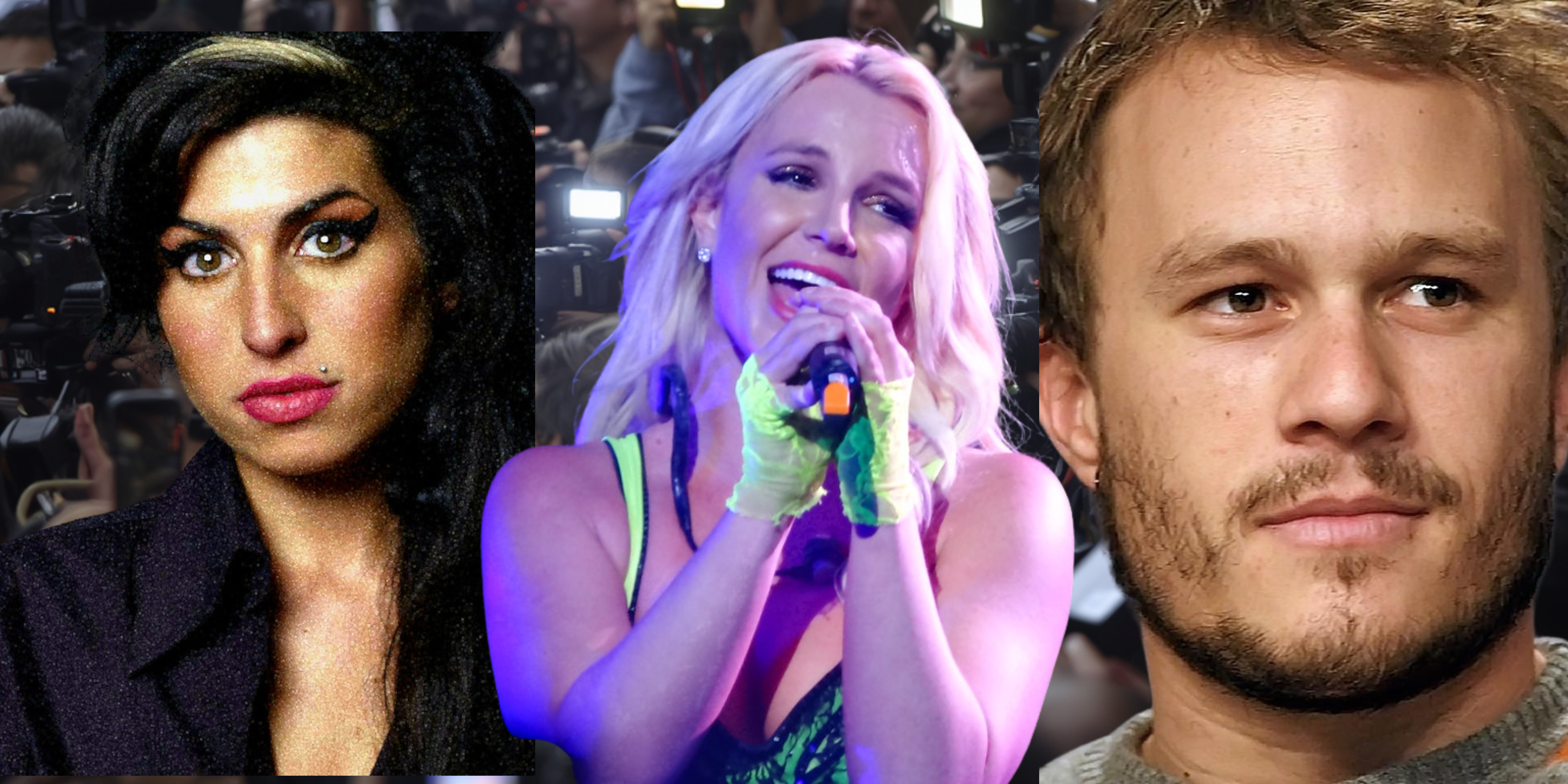
I was in an airport bar somewhere between Montana and Chicago when I heard that Heath Ledger had died. It was January 22nd, 2008, and I was doing my best to act as if my entire world was not crumbling beneath my feet. I was coming home from a trip to visit my boyfriend, who had discovered that the only thing I was more compulsive about than drinking was lying about my drinking.
When I got on the airplane in Montana, an older man was seated next to me. After takeoff, we both promptly ordered drinks. I was 23 and, although I have no evidence to support this, I remember thinking he was a football coach. At least, he looked the part: He had a southern drawl and a maroon shirt bearing the name of a sports team.
Mostly, what I remember is his delight over how quickly I finished my first drink and ordered another. “Atta girl!” he said, slapping the knee of his blue jeans, and told the waitress he’d take another cocktail as well. By the time our plan landed, we’d both had several drinks.
“I hope you don’t mind if I say,” he began, leaning in too close as the plane taxied on the runway, “I appreciate a young lady who knows how to hold her liquor.” At the time, I was aware this was a weird thing to say for a stranger to say to a woman at least 30 years his junior, but I couldn’t help but flush with a sick pride.
I’d just spent the week trying and failing to hide my chronic alcohol use from the person I loved—a person who’d made it clear that he was disgusted and disappointed by my drinking. So if some random man wanted to compliment me for the same behavior I’d been so resoundingly criticized for, I’d take it.
I can’t remember if I stopped at an airport bar during a layover, or, in a decision that could only be made by someone with a true dependency on alcohol, decided to hit the airport bar in Chicago before taking the train home. I just remember being in a crowd of people staring at a TV behind the bar and a shot of vodka gliding down my throat when a news anchor announced that Heath Ledger—the critically acclaimed actor of Brokeback Mountain, but whom I associated with the (equally important) teenage classic 10 Things I Hate About You—had died. Initial reports suggested that sleeping pills and other prescription medications were present at the scene, but there was little reporting beyond that.
I registered news as though I were in a dream—muttering “sad” and “oh no” along with the other customers, but more focused on finishing another drink and (reluctantly) making my way back to my real, crumbling life.
I kept drinking once I got back to my sister’s apartment and started again when I woke up in the morning. Though I don’t remember this, it was the same day (January 23rd, 2008), The Sun published a video showing Amy Winehouse smoking crack—setting the tabloids, gossip columns, and even legacy media outlets into a frenzy. The default position of these culture critics was that Winehouse was an object lesson in depravity.
This was, after all, the era of widespread ridicule of Anna Nicole Smith (both before and after her death), mockery of Lindsey Lohan, and Britney Spears for their substance misuse, multiple stints in rehab, and grainy photos taken without their consent through the windows of their homes. It’s impossible to ignore the gendered aspects of the coverage—women were portrayed as irresponsible and insane; men were more likely to be tortured and tragic. After Ledger’s death, for example, the blogger Perez Hilton sold t-shirts with a heart around Ledger’s image and the words “Why Couldn’t It Be Britney?” underneath.
Bloggers spewed unvarnished cruelty, but legacy media gave the ghoulishness a sheen of legitimate discourse. When the Winehouse video surfaced, the New York Times ultimately chalked the incident up to the singer having either narcissistic or idiotic motivations—either way, deserving of blame.
NYT Culture correspondent Jon Pareles wrote:
“Why, for instance, was Ms. Winehouse letting someone shoot video, in a private setting, of her puffing that pipe in the first place? Maybe it’s some version of ‘keepin’ it real,’ the fallacy that insists art must be autobiographical to be worthwhile, as if art were documentation rather than storytelling. Maybe it’s obliviousness, although, since the camera followed her around, she was likely to know it was there. Maybe she mistakenly trusted that whoever made the video would resist another temptation: the potential profit to be made providing it to a tabloid.
Perhaps Ms. Winehouse misunderstood what should be clear in the age of the Internet: Everything recorded can be duplicated and distributed. And possibly the video was, in its own bleary way, a kind of performance. She is keeping her audience informed if not exactly entertained.”
In every hypothetical presented, the violation of Winehouse’s privacy is presented as either cynically orchestrated by the singer for publicity (because who doesn’t want their award-winning career overshadowed by headlines about their use of crack cocaine?) or the result of her own shallow carelessness.
At the time, I wasn’t aware of any of this; I was stumbling through what would be the last day of my drinking. While writers were churning out their Winehouse think pieces for the following day, I was in the Emergency Room with a .4 Blood Alcohol Content and a cop watching my every move.
When I met with a psychiatrist in the ER—a formality that needed to occur before my inevitable admission to the Psych Ward hours later, he kept trying to convince me that I must have had some other motivation for bringing alcohol to work with me than...simply wanting to drink alcohol. In a prolonged exchange so strange I remember it vividly among the haze of that day, the doctor was intensely focused on why I would bring a bottle of vodka to work.
“That’s not what alcoholics do,” he said. “They might leave work to drink, but they don’t bring it into the office with them.” (Which is a wild thing to say, but also, have you heard of a little television show called Mad Men?) He proceeded to tell me that his theory was that I brought alcohol to work because I hated my job (true) and subconsciously wanted to get fired (false).
I found this whole statement confusing. I was happy to have someone tell me I wasn’t an alcoholic (though I was starting to believe otherwise), but I didn’t buy that I was engaging in subconscious trickery in hopes of getting fired. I thought, and still think, that I simply couldn’t be without alcohol for any meaningful length of time.
Roughly a week later, after I’d been through detox and the psych ward (and a different psychiatrist had made a convincing case for my alcoholism), I was getting settled in an inpatient rehab. Someone got a copy of US Weekly, which is how we all learned that Britney Spears had been put on a 5150 hold in an LA psych unit after barricading herself in the bathroom with her young son.
None of the patients in my rehab needed an explanation of what a 5150 hold was (California’s involuntary psychiatric hold for up to 72 hours if a designated professional deems the individual a risk to themselves or others); at least a third of us were personally familiar with the process. While we may not have had the solemn appreciation for what it must have been like to be hounded and publicly picked apart for years, we absolutely understood the 5150 of it all. She was one of us.

That incident was the catalyst for Spears’s much-discussed conservatorship. While watching that debate unfold a few years ago, I remember thinking how surreal it was that Spears’s independence (her finances, medical decisions, career choices) had been frozen during the same 13 years that I’d had the opportunity to build a sober adult life.
I was sad to learn that she was arrested for a DUI a few months ago, and I can’t do anything beyond hoping that she gets whatever help she needs. And while the media coverage I’ve seen of the incident hasn’t mirrored the downright cruel coverage of the aughts, I can’t help but notice how much attention it's received. There’s no excuse for driving under the influence, and she’s lucky no one was hurt before she was stopped.
But it’s notable that another Spears story got completely swallowed by her DUI coverage. Just hours before her arrest, news broke that the singer was granted a restraining order against a man who had been harassing her since 2013—a man who had previously been convicted of stalking her and trespassing at her home. I don’t know what living with those kinds of threats does to a person, but it’s a good reminder of all the parts of a person’s life (celebrity or otherwise) we don’t see.
Would the maybe-football-coach on the airplane have been so impressed with my alcohol tolerance if he’d known I’d earned it through around-the-clock alcohol intake? Would the ER psychiatrist have spent so long trying to convince me of his theory of my subconscious motivations if I’d been older than 23, or a man? I don’t know. But I do know that behind every addiction exists something more complex than what the casual observer sees, and that people with addiction deserve our compassion, even if we can’t always accept or tolerate the behavior that results from it.
The one media personality who spoke out about this in 2007, after a highly publicized incident in which Spears shaved her head and beat a paparazzi’s car with an umbrella, was someone who knew well what it was like to live in the dark morass of active addiction: Craig Ferguson.
His words were prescient then and just as relevant now. I hope you’ll take a few minutes to watch the segment below. I’ve done so countless times. Every time I watch, it strikes me how difficult it is for Ferguson to convey to his late-night audience that he’s not launching into jokes about Spears. They’re so primed to laugh at what they’ve seen of the superstar’s corroding mental health that he has to repeat that no, really, he’s being serious about this. I hope that, nearly two decades later, it wouldn’t take us so long to figure that out.
If you enjoyed this post, please like, comment, or share it. Doing so helps others find the newsletter!
Want to show your support of AASL without committing to a paid subscription? Leave a one-time tip here.
Send questions and feedback to askasoberlady@gmail.com. By sending a question, you agree to let me reprint it in the newsletter with your name redacted or changed. Emails may be edited for length or clarity.
I’m not a doctor or mental health professional, so my advice shouldn’t be construed as medical or therapeutic. You are free to take or leave it.
The ignorance of the psychiatrist who said alcoholics don’t bring booze to work is astonishing. And the Ferguson clip is wonderful. I’ll bet he saved a life or two that night.
Medical professionals need so much more training on addiction, whether they're doctors, nurses, or anyone else in health care. That doctor's ignorance could've cost your life. Good for you for standing up for yourself.